Hoquetus is a term used to explain a highly elaborate vocal polyphonic form, widespread in medieval France (between the 11th and 13th Century) and in some Central African indigenous tribes (such as the Aka pygmies). It is characterized by the dividing of voices through pauses between syllables, so as to recall an hiccup effect.
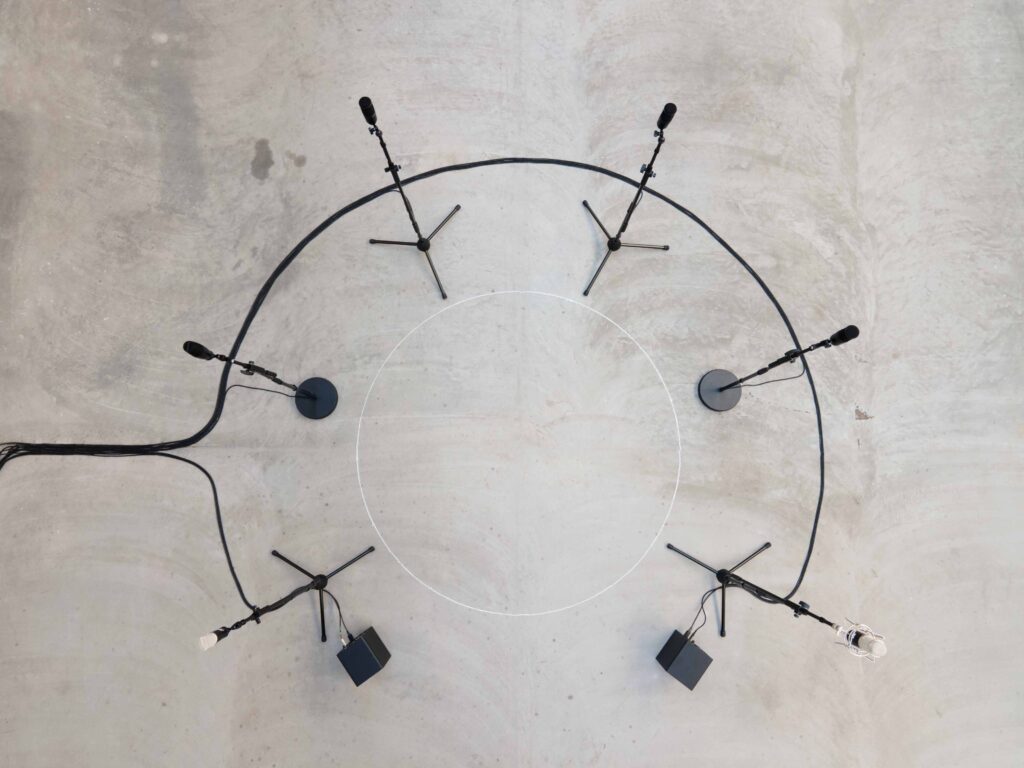
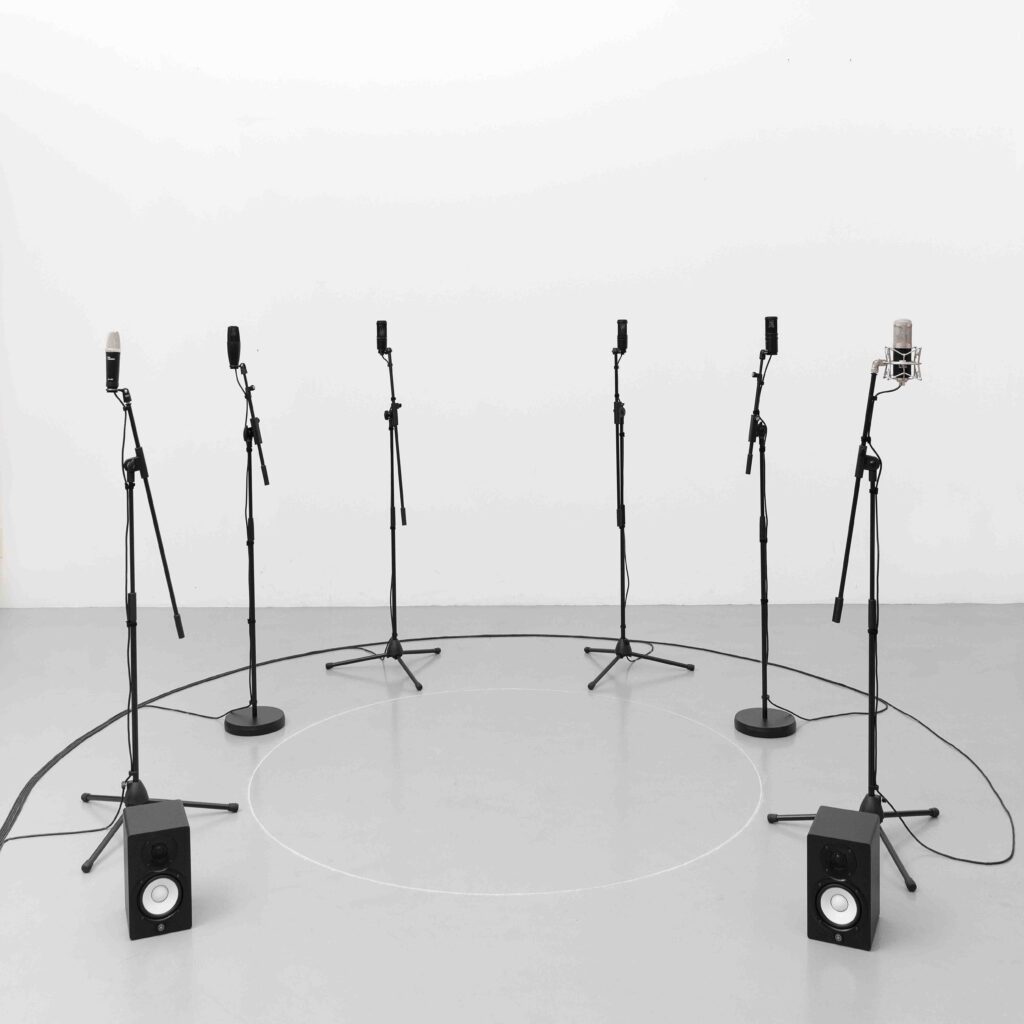
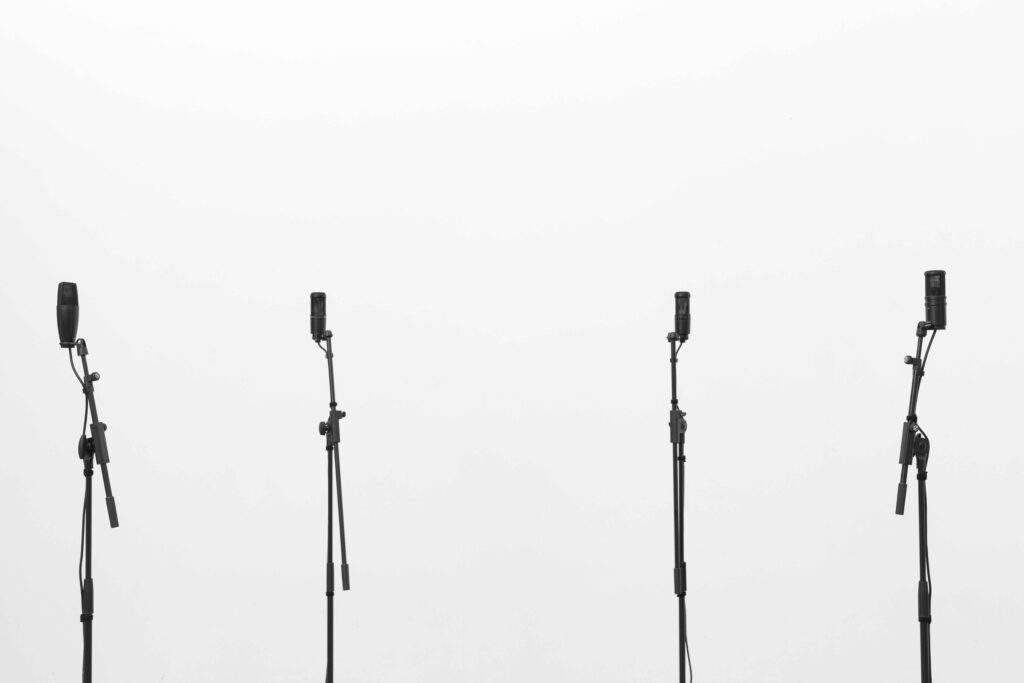
The installation consists of six professional and manipulated microphones, which give voice in a rhythmic way to sounds of cetacean and newborn, (two speakers which produce a suspended sound in a circle drawn with chalk). In deepening the listening of the first, the artist felt a sense of familiarity with the verses produced by the newborn and has therefore imagined to let them communicate as one, creating a choir that brings back to an idea of origin.
Angela Madesani
Sound installation – 2021
25” sound mix, six manipulated professional studio microphones, three stereo speakers, four players, six mic stands, two active speakers, cabling and sundry installations, chalk drawing, variable size